| Kakum Canopy Walkway | Kew Xstrata Treetop Walkway | |
| Height | 40 m | 18 m |
| View |  |  |
| Length | 300 m | 200 m |
| Support | Six trees | Five 12-18m concrete piles |
| Materials | Steel cables, rope and narrow wood planks  | 400 tonnes of steel |
| Construction | No bolts or nails | Very sturdy. AND, the trusses are based on the Fibonacci sequence =-P |
| "Fauna" |  (OK. This was actually at the Bosum Forest Reserve) (OK. This was actually at the Bosum Forest Reserve) |  (Technically part of the Rhizotron exhibit) |
Wednesday, August 26, 2009
Kakum Canopy Walkway vs Kew Garden Xstrata Treetop Walkway
Kakum National Park is one of the few virgin, coastal rainforests remaining in west Africa. The canopy walk is awesome! I also went to Kew Gardens in London on my way back to Boston. They also had a canopy walk. A few comparisons...

Tuesday, August 25, 2009
Itin summary + Links to photos
So I've been back from Ghana for about 10 days. All done with my malarone pills. (Proud of me, Ros-in-Brussels?) I suspect I may have a parasite since I've been eating like a fiend since I've been back, plus some other symptoms that I won't discuss, but it probably is just my excuse to be a glutton.
I've uploaded and sorted most of the photos that I took. I still have tons of video to process, thanks to my handy flip video camera. Here's one with the cutest children I met, and a couple of B-rolls to whet your appetite: Kumasi street-360 and
View of village road from taxi
For those who don't want to click through the various albums some of which have more extensive descriptions (linked below), the photos are compiled here. Most have captions, and usually a map link to indicate another area I visited.
To briefly orient you, the lot consists first of city street scenes in Accra and Kumasi, including central market (or Kejetia market). Photographs of the sheet metal (re)working area at the market are followed by photos of Suame Magazine, reputedly the largest artisan engineer complex, with between 100-200K workers. I asked the folks at ITTU to introduce me to the female mechanics/workers. They thought for a good two minutes and then took me to a body shop. Alas, she was gone for the day.
Adventures in Koforidua, where I was "kidnapped" by Reverend Freeman Opoku, who led me to two different large markets and a funeral in the next town are posted here. Unfortunately, I visited Koff-town before I realized Bikes Not Bombs had an outfit here that has trained six mechanics, including one female. Well, OK, I met here in Kumasi when she and another colleague visited IDDS.
The kente weaving village I visited was Bonwire, about an hour northwest of Kumasi (don't ask me about distances!). I was told there was one female weaver there, but she is in such "high demand" because she is so rare, that she usually tours. There are also pictures of adinkra cloth printing. The young man who showed me around town is supposedly on his way to Detroit for college this fall. And he said he attended UMass Boston a couple of years ago!
The Besease shrine is one of a handful of rebuilt/intact shrines in the area. The wiry caretaker assembled a bunch of tortoise(s) (shells) while I looked around. So cute!
I visited both Elmina and Cape Coast "castles". So much sadness. So much resilience. So much history, not only the painful part, but the glorious kingdoms and knowledge of Africa, that we don't teach or learn about. Grateful to have attended one of the Panafest events, that both honored the past and emanated hope for a brighter future.
(gear change) The penultimate set of pictures consist of my serious R&R at a tranquil seafront hotel in Akwidaa, (blog post here) and then the good people at Pokuase who will take care of Science Club for Girls in Ghana the coming year!
This is essentially the travel itin. Reflections will take a little while...
I've uploaded and sorted most of the photos that I took. I still have tons of video to process, thanks to my handy flip video camera. Here's one with the cutest children I met, and a couple of B-rolls to whet your appetite: Kumasi street-360 and
View of village road from taxi
For those who don't want to click through the various albums some of which have more extensive descriptions (linked below), the photos are compiled here. Most have captions, and usually a map link to indicate another area I visited.
To briefly orient you, the lot consists first of city street scenes in Accra and Kumasi, including central market (or Kejetia market). Photographs of the sheet metal (re)working area at the market are followed by photos of Suame Magazine, reputedly the largest artisan engineer complex, with between 100-200K workers. I asked the folks at ITTU to introduce me to the female mechanics/workers. They thought for a good two minutes and then took me to a body shop. Alas, she was gone for the day.
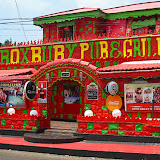
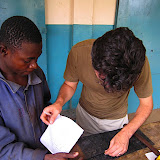
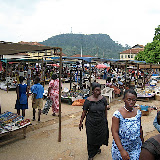
Adventures in Koforidua, where I was "kidnapped" by Reverend Freeman Opoku, who led me to two different large markets and a funeral in the next town are posted here. Unfortunately, I visited Koff-town before I realized Bikes Not Bombs had an outfit here that has trained six mechanics, including one female. Well, OK, I met here in Kumasi when she and another colleague visited IDDS.
The kente weaving village I visited was Bonwire, about an hour northwest of Kumasi (don't ask me about distances!). I was told there was one female weaver there, but she is in such "high demand" because she is so rare, that she usually tours. There are also pictures of adinkra cloth printing. The young man who showed me around town is supposedly on his way to Detroit for college this fall. And he said he attended UMass Boston a couple of years ago!
The Besease shrine is one of a handful of rebuilt/intact shrines in the area. The wiry caretaker assembled a bunch of tortoise(s) (shells) while I looked around. So cute!
I visited both Elmina and Cape Coast "castles". So much sadness. So much resilience. So much history, not only the painful part, but the glorious kingdoms and knowledge of Africa, that we don't teach or learn about. Grateful to have attended one of the Panafest events, that both honored the past and emanated hope for a brighter future.
(gear change) The penultimate set of pictures consist of my serious R&R at a tranquil seafront hotel in Akwidaa, (blog post here) and then the good people at Pokuase who will take care of Science Club for Girls in Ghana the coming year!
This is essentially the travel itin. Reflections will take a little while...
Friday, August 14, 2009
Fishing villages
Akwidaa
Eight men processed to a waiting piroque in the estuary with a
fishing net.

On my hike back from the Cape Three Points Forest Reserve, a bunch of fishing boats have pulled in, unloading their catches. Fisherman (and a couple of women) emptied the basins of fish, sorted them into piles, and I presume, began bidding for them.

Cape Coast and Elmina
Just behind the Cape Coast Castle, beyond the Door of (No) Return, lies a busy beach with boats coming and going, being hauled up onto the beach on planks and logs, men selling fish, mending nets.

The Elmina Castle is bordered by a less hectic estuary.

Eight men processed to a waiting piroque in the estuary with a
fishing net.

On my hike back from the Cape Three Points Forest Reserve, a bunch of fishing boats have pulled in, unloading their catches. Fisherman (and a couple of women) emptied the basins of fish, sorted them into piles, and I presume, began bidding for them.

Cape Coast and Elmina
Just behind the Cape Coast Castle, beyond the Door of (No) Return, lies a busy beach with boats coming and going, being hauled up onto the beach on planks and logs, men selling fish, mending nets.

The Elmina Castle is bordered by a less hectic estuary.

Photos, finally!

 Two common types of non-H2O libation in Ghana are soft drinks and fresh coconuts. I've not more Fanta orange and lemon during this trip than I have had in 15 years. They are yummy. The pineapple pop was a bit too sweet for me. (Well, there's of course the water satchets that are supposed to be purified, sold on the streets for 5-15 pesawas. You bite off a corner and suck or squeeze the water into your mouth. Needless to say, the streets and coutryside are littered with them, and many organizations are trying to make coin bags, satchels etc with these and other drinks wrappers).
As for fresh coconuts, there are two kinds, soft and hard. Suffice it to say even their hard coconuts is not even remotely close to the hard dried excuses of white matter we get in the states. For 50 pesewas, he seller hacks open the coconut leaving a 1.5 inch hole at the top, from which you sip the refreshing juice. It's not sweet, but lightly flavored. I've had ones that probably had a good liter of liquid in it that I struggled to put down. Then he takes it back and cuts the nut open into 3 or 4 pieces. He also fashions a pentagonal piece with a slightly sharp edge on one end. The expert Ghanaians scoop out the pulp, but after 1-2 times, I had the seller do it for me. Soft, and more coconut-y than the juice. Lip-smacking good.
The other drink that's popular here is Malta, a dark slightly fizzy drink that's supposed to be composed of malt, which I love. I thought it tastes like molasses. Shall we say it's an acquired taste?
Tuesday, August 11, 2009
Can't believe I'm leaving!!
I arrived in my little hotel in Accra yesterday a tiny bit depressed. The teacher's workshop went OK--not as hands-on as I would have liked because not all the materials were available. Yes, beating myself over my head that I could have tried harder. I also didn't realize the teachers were expecting to get paid their stipend then, so they were not happy when they left. Then it was me and myself in a dingy hotel room without Ben, after several days around people. And I have to leave Ghana. I was also dead tired, not having slept the night before--that's enough to get one down without all the other factors.
So I get ready to go to dinner and realize I only had 7 cedis on me. Of course it's way after hours and even the forex bureaux were closed. So, em, a cleanse for my stomach with some Voltic.
Today was much better. Good night's sleep, had a zatar croissant that was quite good, bought my souvenirs in the morning. Then I spent most of the afternoon around Makola market purchasing stationery and materials for the science clubs, again realizing I'm not much of a haggler.
Makola market, from what I have seen, consists of a three- or five-storey building with a narrow "courtyard" and very small (3' x 5') stores spilling onto the verandah; a sprawling market with sections selling enameled and aluminium houseware in one section (the cutest nested pots displayed), plasticware in another and utensils, both wooden and metal, in a third. Then there's the cloth section, including an enclosed area where women were making shirts and dresses; the sewing accessories section; and the beauty stores--lotions and shampoo and other hair accessories, including real human hair. And of course, sandals, and shoes. At the food market, I saw many crabs, which one never finds in a restaurant, or even on the road side. (The only other glimpse of crustaceans was on the road between Accra and Cape Coast, where they sell prawns on a stick by the road side. Oh, and there was lobster on the menu at Safari Beach). I also saw the first set of glazed pottery at Makola.
Though still busy, this market is like a stroll in the park compared to Kejetia in Kumasi, maybe one quarter of the size. Kejetsia is supposedly THE largest market in west Africa. More about that market later. Suffice it to say that Ben bought a cake pan in the shape of Ghana.
One phenomenon that took me several iterations to figure out was that girls with empty basins on their heads will follow you and offer to be your porter. (I had three big bags with me towards the end). The girls' english was not good, so I couldn't quite determine what they wanted, and even asked the first girl if she had something to sell me. The last girl, when I finally was smart enough to figure it out, followed me around, but only just outside the walls of the market. I should've just offered them a few pesawas.
Since my flight is at 10:40 p.m. I decided to enjoy dinner at a restaurant, Tribes at Afia Village Hotel, by the ocean tonight. I ordered the same meal I had at Baku the first day I arrived in Accra, another serene spot. It was a beautiful ending for my trip, the ocean breeze and waves at a distance, away from the dust and people, and lovely food. The difference was that this restaurant were mostly obroni, the other locals. And yes, there were mosquitoes, but thankfully and wisely, I had my DEET! (And there was an englishwoman berating a Ghanaian researcher on his experimental method, plus the lack of impact/intervention of his study on HIV-infected women, except perhaps to reduce stigma. I should have given her a thumbs up.
Curiously, I ran into a family who were on the same tour as I at Cape Coast at the restaurant. They offered me half a glass of the most delicious red wine I've had. Smoother than anything I've had. Because, it's a $100-bottle he brought over from France.
Then at the airport, I ran into Jessie, one of the Mormon girls from Boston I met at my trip to Kakum National Park. She was short $25 for the extra departure tax, so I spotted her. I figured she'll pay me back. But here I am in the business class lounge, ignoring them! =-)
And I'm going to miss Ben doing tango at the IDDS talent show!!
Onto the plance I go!!
So I get ready to go to dinner and realize I only had 7 cedis on me. Of course it's way after hours and even the forex bureaux were closed. So, em, a cleanse for my stomach with some Voltic.
Today was much better. Good night's sleep, had a zatar croissant that was quite good, bought my souvenirs in the morning. Then I spent most of the afternoon around Makola market purchasing stationery and materials for the science clubs, again realizing I'm not much of a haggler.
Makola market, from what I have seen, consists of a three- or five-storey building with a narrow "courtyard" and very small (3' x 5') stores spilling onto the verandah; a sprawling market with sections selling enameled and aluminium houseware in one section (the cutest nested pots displayed), plasticware in another and utensils, both wooden and metal, in a third. Then there's the cloth section, including an enclosed area where women were making shirts and dresses; the sewing accessories section; and the beauty stores--lotions and shampoo and other hair accessories, including real human hair. And of course, sandals, and shoes. At the food market, I saw many crabs, which one never finds in a restaurant, or even on the road side. (The only other glimpse of crustaceans was on the road between Accra and Cape Coast, where they sell prawns on a stick by the road side. Oh, and there was lobster on the menu at Safari Beach). I also saw the first set of glazed pottery at Makola.
Though still busy, this market is like a stroll in the park compared to Kejetia in Kumasi, maybe one quarter of the size. Kejetsia is supposedly THE largest market in west Africa. More about that market later. Suffice it to say that Ben bought a cake pan in the shape of Ghana.
One phenomenon that took me several iterations to figure out was that girls with empty basins on their heads will follow you and offer to be your porter. (I had three big bags with me towards the end). The girls' english was not good, so I couldn't quite determine what they wanted, and even asked the first girl if she had something to sell me. The last girl, when I finally was smart enough to figure it out, followed me around, but only just outside the walls of the market. I should've just offered them a few pesawas.
Since my flight is at 10:40 p.m. I decided to enjoy dinner at a restaurant, Tribes at Afia Village Hotel, by the ocean tonight. I ordered the same meal I had at Baku the first day I arrived in Accra, another serene spot. It was a beautiful ending for my trip, the ocean breeze and waves at a distance, away from the dust and people, and lovely food. The difference was that this restaurant were mostly obroni, the other locals. And yes, there were mosquitoes, but thankfully and wisely, I had my DEET! (And there was an englishwoman berating a Ghanaian researcher on his experimental method, plus the lack of impact/intervention of his study on HIV-infected women, except perhaps to reduce stigma. I should have given her a thumbs up.
Curiously, I ran into a family who were on the same tour as I at Cape Coast at the restaurant. They offered me half a glass of the most delicious red wine I've had. Smoother than anything I've had. Because, it's a $100-bottle he brought over from France.
Then at the airport, I ran into Jessie, one of the Mormon girls from Boston I met at my trip to Kakum National Park. She was short $25 for the extra departure tax, so I spotted her. I figured she'll pay me back. But here I am in the business class lounge, ignoring them! =-)
And I'm going to miss Ben doing tango at the IDDS talent show!!
Onto the plance I go!!
Sunday, August 9, 2009
Science Club for Girls in Ghana!
It's 3:30 am. I'm staying up to wake up the taxi driver to take me to the bus station, so I can catch one of the earliest buses from Kumasi down towards Accra. In about 7 hours, I will be delivering a 4-hour workshop to 10 teachers from the Pokuase area, to prepare them to lead Science Clubs at their schools in the coming year.
I delivered the first workshop to 14 teachers and 2 principals about 10 days ago. That particular workshop focused on regarding science as a process, and the importance of hands-on (practical) exercises as a way to learn and experience science. I also introduced the learning cycle and questioning techniques as ways to engage student thinking and participation.
(Click on photo to go to album)
I considered the workshop a success. 7 schools in and around Pokuase were represented. The teachers were attentive and participated enthusiastically. The evaluations suggested that teachers were hungering for professional development--many said the 2.5-hour workshop was not long enough, and wished for additional opportunities. They certainly wanted more hands-on examples that were related to the curriculum. It would certainly be worthwhile to have more time to sit down with teachers and work through specific questions to use and more concrete ways to introduce topics, as I only had time to do so with one set of them.
Importantly, one person wrote that this was probably the first time that teachers had the opportunity to gather and hear from each other and learn from each other's practices. It was certainly important and encouraging to me that many of them were very proactive and already engaged in good science teaching practices, and for their colleagues to realize it is possible to teach science differently. The evaluation suggested that almost of all them recognized the importance of the practical as complementary to the "theory" and all said they would definitely change the way they teach as a result of the workshop. Moreover, each school wanted copies of the skits--two different scenarios for wrapping up a session--from the dogmatic, intimidating teacher to the encouraging "guide of the side". My only worry is that a few may have thought both were positive examples of teacher-student interaction.
Today's training will be with 10 teachers, who will work in pairs to recruit girls in 4th grade and conduct science clubs. They will definitely be getting a lot of hands-on experience. The hope is that not only will girls in the clubs benefit, but the training and experience will provide substantive resources that will also transform teaching in the school day classroom.
With luck, Dr. Olivia Kwapong at the University of Ghana and Frances (MIT alum living in Accra) will also be able to connect me with additional like-minded Ghanaian individuals and/or institutions here so we can have local counsellors and oversight.
Crossing my fingers!
I delivered the first workshop to 14 teachers and 2 principals about 10 days ago. That particular workshop focused on regarding science as a process, and the importance of hands-on (practical) exercises as a way to learn and experience science. I also introduced the learning cycle and questioning techniques as ways to engage student thinking and participation.
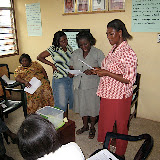 |
| Teachers Workshop |
I considered the workshop a success. 7 schools in and around Pokuase were represented. The teachers were attentive and participated enthusiastically. The evaluations suggested that teachers were hungering for professional development--many said the 2.5-hour workshop was not long enough, and wished for additional opportunities. They certainly wanted more hands-on examples that were related to the curriculum. It would certainly be worthwhile to have more time to sit down with teachers and work through specific questions to use and more concrete ways to introduce topics, as I only had time to do so with one set of them.
Importantly, one person wrote that this was probably the first time that teachers had the opportunity to gather and hear from each other and learn from each other's practices. It was certainly important and encouraging to me that many of them were very proactive and already engaged in good science teaching practices, and for their colleagues to realize it is possible to teach science differently. The evaluation suggested that almost of all them recognized the importance of the practical as complementary to the "theory" and all said they would definitely change the way they teach as a result of the workshop. Moreover, each school wanted copies of the skits--two different scenarios for wrapping up a session--from the dogmatic, intimidating teacher to the encouraging "guide of the side". My only worry is that a few may have thought both were positive examples of teacher-student interaction.
Today's training will be with 10 teachers, who will work in pairs to recruit girls in 4th grade and conduct science clubs. They will definitely be getting a lot of hands-on experience. The hope is that not only will girls in the clubs benefit, but the training and experience will provide substantive resources that will also transform teaching in the school day classroom.
With luck, Dr. Olivia Kwapong at the University of Ghana and Frances (MIT alum living in Accra) will also be able to connect me with additional like-minded Ghanaian individuals and/or institutions here so we can have local counsellors and oversight.
Crossing my fingers!
Tic tac toe
After the workshop, I wandered through the village around the main round in Pokuase, and ended up in an open area where a group of about ten children were playing and laughing. I watched them for a while, and of course, they came up, shouting “Obroni” and wanting their pictures taken. I obliged and they were delighted.
I ended up spending about an hour teaching and watching them play tic-tac-toe and "hangman", which I renamed "draw a little girl" in the dirt with a growing group of kids. One of the girls, Sarah, caught up to the game and tactics immediately, and I crowned her the Tic Tac Toe champion of Pokuase. Lots of fun.
An older woman had been persistently waving me down to come visit when I was with the kids. During a lull in the game, a young girl came and invited me with urgency to visit this woman, so I stepped into her family’s compound and sat on a stool across from her. Two women, another Connie and her mother were making banku, pounding away over a fire to the left, while a third, Precious, sat towards the back against the house, tending to her son who has malaria. His mother said he has been to the clinic but obviously looked very tired. She showed me the medication. After all these years of studying the parasite in the lab, this was my first interaction with a patient with the disease.
Precious seemed to be a happy-go-lucky type, who also delighted in showing me her nephew and niece, both around a year. Precious would pick the poor girl up with one arm, and laughed at how emaciated she was. The girl was obviously distressed by the rough handling and the sneering, and quickly hid herself when let go. I made a sympathetic face, and asked if the girl was feeding properly and if she had been gaining weight. The answer was apparently yes, but I could not be sure. The boy, who was rotund if not obese, was equally made a spectacle, drawing more laughs from Precious and Connie and the rest of the compound.
Finally, the grandmother, the woman who drew me into the compound, started speaking to me—in Twi. I guessed that she must have had a serious infection or abscess in her right foot, which was discreetly covered by a handkerchief tied around her ankle. She mentioned some doctor, Richard, and gestured that he had made a cut. Thankfully, she did not lift the handkerchief. It did not smell, so at least that was a good sign. In any case, I really felt like I'm the kind of doctor that doesn't do anyone any good.
I left, with a trail of kids behind me. I guess that must be how it feels if you had a fan club!
[I had promised the kids that I would return the next week. I did, but had a rough time finding the same spot. I wandered around for a good thirty minutes, in and out of alleys and dead ends. I know I did not venture very far into the village from the main road. But I really had no point of reference. And I had those chirpy chicks to show them…]
I ended up spending about an hour teaching and watching them play tic-tac-toe and "hangman", which I renamed "draw a little girl" in the dirt with a growing group of kids. One of the girls, Sarah, caught up to the game and tactics immediately, and I crowned her the Tic Tac Toe champion of Pokuase. Lots of fun.
 |
| From Ghana-Pokuase |
An older woman had been persistently waving me down to come visit when I was with the kids. During a lull in the game, a young girl came and invited me with urgency to visit this woman, so I stepped into her family’s compound and sat on a stool across from her. Two women, another Connie and her mother were making banku, pounding away over a fire to the left, while a third, Precious, sat towards the back against the house, tending to her son who has malaria. His mother said he has been to the clinic but obviously looked very tired. She showed me the medication. After all these years of studying the parasite in the lab, this was my first interaction with a patient with the disease.
Precious seemed to be a happy-go-lucky type, who also delighted in showing me her nephew and niece, both around a year. Precious would pick the poor girl up with one arm, and laughed at how emaciated she was. The girl was obviously distressed by the rough handling and the sneering, and quickly hid herself when let go. I made a sympathetic face, and asked if the girl was feeding properly and if she had been gaining weight. The answer was apparently yes, but I could not be sure. The boy, who was rotund if not obese, was equally made a spectacle, drawing more laughs from Precious and Connie and the rest of the compound.
Finally, the grandmother, the woman who drew me into the compound, started speaking to me—in Twi. I guessed that she must have had a serious infection or abscess in her right foot, which was discreetly covered by a handkerchief tied around her ankle. She mentioned some doctor, Richard, and gestured that he had made a cut. Thankfully, she did not lift the handkerchief. It did not smell, so at least that was a good sign. In any case, I really felt like I'm the kind of doctor that doesn't do anyone any good.
I left, with a trail of kids behind me. I guess that must be how it feels if you had a fan club!
[I had promised the kids that I would return the next week. I did, but had a rough time finding the same spot. I wandered around for a good thirty minutes, in and out of alleys and dead ends. I know I did not venture very far into the village from the main road. But I really had no point of reference. And I had those chirpy chicks to show them…]
Thursday, August 6, 2009
A taste of paradise at Akwidaa
Bliss. And an overwhelming sense of gratitude for everything that I have. That's how I felt during the three days that I was in Akwidaa, an idyllic fishing village at the mouth of an estuary and bordering the Atlantic Ocean. I arrived late Saturday afternoon, apparently on the wrong tro-tro, which took the new town route. The route to the old town, though still an unpaved road, was like a Formula One racetrack compared to the deeply gullied dried mud path that the inbound van took. People literally dusted themselves off when the got off the van.
As usual, several people asked where I needed to go, and pointed me in the right direction. "Go down the hill, over the bridge, and it's two beaches down from the village". So down the small hill I went. And that's when my "blessings" started to mount. First, the overcast sky that I've been under for the past three days lent way to a warm setting sun and luminous light. As I emerged from the houses onto the beach below, three brightly colored pirogues (long fishing boats) greeted me on the estuary, with the village across, and beyond that, the deep blue of the Atlantic Ocean. To my right, a narrow wooden bridge held up by what looked like sticks connects the mainland to the village. As I approached, four young people bearing twigs and small logs on their heads cross the bridge, silhoutted against the blue sky, a small promontory in the distance. Of course I stopped to take a photo. As I'm crossing the bridge, I can't but think to myself, "I have entered paradise". I tried to send Ben a text message but alas, no signal.
(Click on photo to go to album)
And then it gets better. I walk along the sandy beach, golden light and warm breeze on my skin, the Atlantic crashing twenty feet to my right, foaming and racing onto the beach, while on my left, palm trees. You know, the "stereotypical" beach scene. My small backpack feels even lighter, and I have a spring in my step. I am so lucky, I think to myself.
I pass by the first beach, where the Green Turtle Lodge was located, accompanied by two young boys from the village both waiting for their examination results and uncertain of their ability to pay for high school). I have tried to make a reservation there, but they were full, and I was glad I had to stay further down. I am sure everyone there is very nice, but they certainly cater to the younger, backpacking/student volunteering crowd. So on I go, round another bend before I reach the Safari Beach Lodge.
And by a convoluted arrangement that I won't go into, I get to stay in a very tastefully decorated ocean front chalet as big as my living room, with a 4-poster king size bed and an almost perfect view for $40/night. (View marred by stump of palm tree smack dab in the middle of field of vision from the bed). I decided I could afford to splurge.
Dinner--seared halibut-like fish in a bright red lobster sauce that tasted like the sea; with a fluffy yam cake, crunchy on the outside and soft but not starchy. I asked for a side of the corn relish that accompanied the beef dish. Such a good choice as the smell of cloves filled my senses, followed by the slight crunch of the sweet corn, and then just enough heat from the chilies to tingle. After meal after meal of banku, palaver sauce, fried plantains and rice, this was a very welcome change.
And the atmosphere was lovely. The jazz music and the kerosene lamps, and yes, again, the crashing waves. I smiled and tasted, and danced in my head, and my thoughts were flooded with all the things that I have the privilege of enjoying, many without thinking. Never again can I ever step into a hot shower; turn on a faucet with potable, running water; flip the switch for instant on lighting; flush the toilet; put a plastic object into the recycling bin; pick up a book; eat a meal; step on an airplane etc, without being thankful. Indeed, I was so profoundly grateful, so profoundly aware of my privilege, I don't quite know whether to feel happy or sad.
As usual, several people asked where I needed to go, and pointed me in the right direction. "Go down the hill, over the bridge, and it's two beaches down from the village". So down the small hill I went. And that's when my "blessings" started to mount. First, the overcast sky that I've been under for the past three days lent way to a warm setting sun and luminous light. As I emerged from the houses onto the beach below, three brightly colored pirogues (long fishing boats) greeted me on the estuary, with the village across, and beyond that, the deep blue of the Atlantic Ocean. To my right, a narrow wooden bridge held up by what looked like sticks connects the mainland to the village. As I approached, four young people bearing twigs and small logs on their heads cross the bridge, silhoutted against the blue sky, a small promontory in the distance. Of course I stopped to take a photo. As I'm crossing the bridge, I can't but think to myself, "I have entered paradise". I tried to send Ben a text message but alas, no signal.
(Click on photo to go to album)
And then it gets better. I walk along the sandy beach, golden light and warm breeze on my skin, the Atlantic crashing twenty feet to my right, foaming and racing onto the beach, while on my left, palm trees. You know, the "stereotypical" beach scene. My small backpack feels even lighter, and I have a spring in my step. I am so lucky, I think to myself.
I pass by the first beach, where the Green Turtle Lodge was located, accompanied by two young boys from the village both waiting for their examination results and uncertain of their ability to pay for high school). I have tried to make a reservation there, but they were full, and I was glad I had to stay further down. I am sure everyone there is very nice, but they certainly cater to the younger, backpacking/student volunteering crowd. So on I go, round another bend before I reach the Safari Beach Lodge.
And by a convoluted arrangement that I won't go into, I get to stay in a very tastefully decorated ocean front chalet as big as my living room, with a 4-poster king size bed and an almost perfect view for $40/night. (View marred by stump of palm tree smack dab in the middle of field of vision from the bed). I decided I could afford to splurge.
Dinner--seared halibut-like fish in a bright red lobster sauce that tasted like the sea; with a fluffy yam cake, crunchy on the outside and soft but not starchy. I asked for a side of the corn relish that accompanied the beef dish. Such a good choice as the smell of cloves filled my senses, followed by the slight crunch of the sweet corn, and then just enough heat from the chilies to tingle. After meal after meal of banku, palaver sauce, fried plantains and rice, this was a very welcome change.
And the atmosphere was lovely. The jazz music and the kerosene lamps, and yes, again, the crashing waves. I smiled and tasted, and danced in my head, and my thoughts were flooded with all the things that I have the privilege of enjoying, many without thinking. Never again can I ever step into a hot shower; turn on a faucet with potable, running water; flip the switch for instant on lighting; flush the toilet; put a plastic object into the recycling bin; pick up a book; eat a meal; step on an airplane etc, without being thankful. Indeed, I was so profoundly grateful, so profoundly aware of my privilege, I don't quite know whether to feel happy or sad.
Subscribe to:
Posts (Atom)